
مقدمة
سواء كنت تصمم مضخة حقن طبية، أو محلل مختبري، أو نظام تحكم في السوائل، فإن فقاعات الهواء غير المكتشفة يمكن أن تضر بالأداء، وفي بعض الحالات، تشكل مخاطر جسيمة. لهذا السبب فإن اختيار مستشعر الفقاعات المناسب ليس مجرد قرار فني—إنه قرار حاسم يؤثر على سلامة ودقة وكفاءة نظامك بشكل عام.
يرشدك دليل المشتري هذا عبر العوامل الرئيسية التي يجب مراعاتها عند اختيار مستشعر فقاعات لتطبيقك ويشرح لماذا يثق شركاء OEM في جميع أنحاء العالم بـ مستشعرات الفقاعات بالموجات فوق الصوتية من يوجي لموثوقيتها وخيارات التخصيص والدعم الهندسي الممتاز.
1. لماذا يعد اكتشاف الفقاعات أمرًا مهمًا
يمكن أن تؤدي فقاعات الهواء في خطوط السوائل إلى مجموعة من المضاعفات حسب التطبيق:
- المخاطر الطبية، مثل الانصمام الهوائي في أنظمة الحقن، مما قد يؤدي إلى حالات تهدد الحياة
- فشل الأجهزة، بسبب أحجام العينات غير الصحيحة، أو مسارات السوائل المسدودة، أو عدم اتساق تدفق السوائل
- عدم دقة القياس، خاصة في الأنظمة التحليلية مثل HPLC، أو محللات الكيمياء السريرية، أو معدات معالجة الدم
- تأخيرات الإنتاج، في التوزيع الآلي للسوائل، أو الطباعة النافثة للحبر، أو خطوط تعبئة السوائل الصناعية، مما يسبب عطلًا في المعدات أو توقفًا عن العمل
يتيح مستشعر الفقاعات الموثوق الكشف الفوري عن فقاعات الهواء، مما يسمح لنظامك بالاستجابة فورًا—بإيقاف المضخة، أو إيقاف العملية مؤقتًا، أو تنبيه المستخدم لاتخاذ إجراء تصحيحي. هذا لا يعزز السلامة فحسب، بل يقلل أيضًا من الهدر، ويحسن الإنتاجية، ويساعد على ضمان الجودة في العمليات الحرجة.
2. الموجات فوق الصوتية مقابل البصرية: أي تقنية استشعار هي الأفضل؟
التقنيتان الأكثر شيوعًا في الكشف عن الفقاعات هما الموجات فوق الصوتية و البصرية. كل منها لها نقاط قوة فريدة وتناسب حالات استخدام مختلفة.
| الميزة | مستشعر فقاعات بالموجات فوق الصوتية | مستشعر فقاعات بصري |
|---|---|---|
| المبدأ | يستخدم الموجات الصوتية للكشف عن اختلافات المعاوقة الصوتية | يستخدم انعكاس/انكسار الضوء للكشف عن الفقاعات |
| طريقة التلامس | بدون تلامس (عبر الأنبوب) | غالبًا بدون تلامس، ولكن قد يتطلب مسار سوائل شفاف |
| توافق السوائل | يعمل مع السوائل الشفافة أو المعتمة | أفضل مع السوائل الشفافة |
| المتانة | أكثر مقاومة للتلوث والتآكل | قد تتدهور مع التعرض للسوائل لفترة طويلة |
| التكلفة | متوسطة | متوسطة إلى عالية |
تتخصص يوجي في مستشعرات الفقاعات بالموجات فوق الصوتية بسبب تصميمها غير الجراحي، و موثوقيتها العالية، و توافقها المتعدد مع مواد الأنابيب وأنواع السوائل المختلفة. هذه المستشعرات مثالية بشكل خاص للأجهزة الطبية والأنظمة الصناعية التي تتطلب أداءً مستقرًا وقابلًا للتكرار بمرور الوقت.
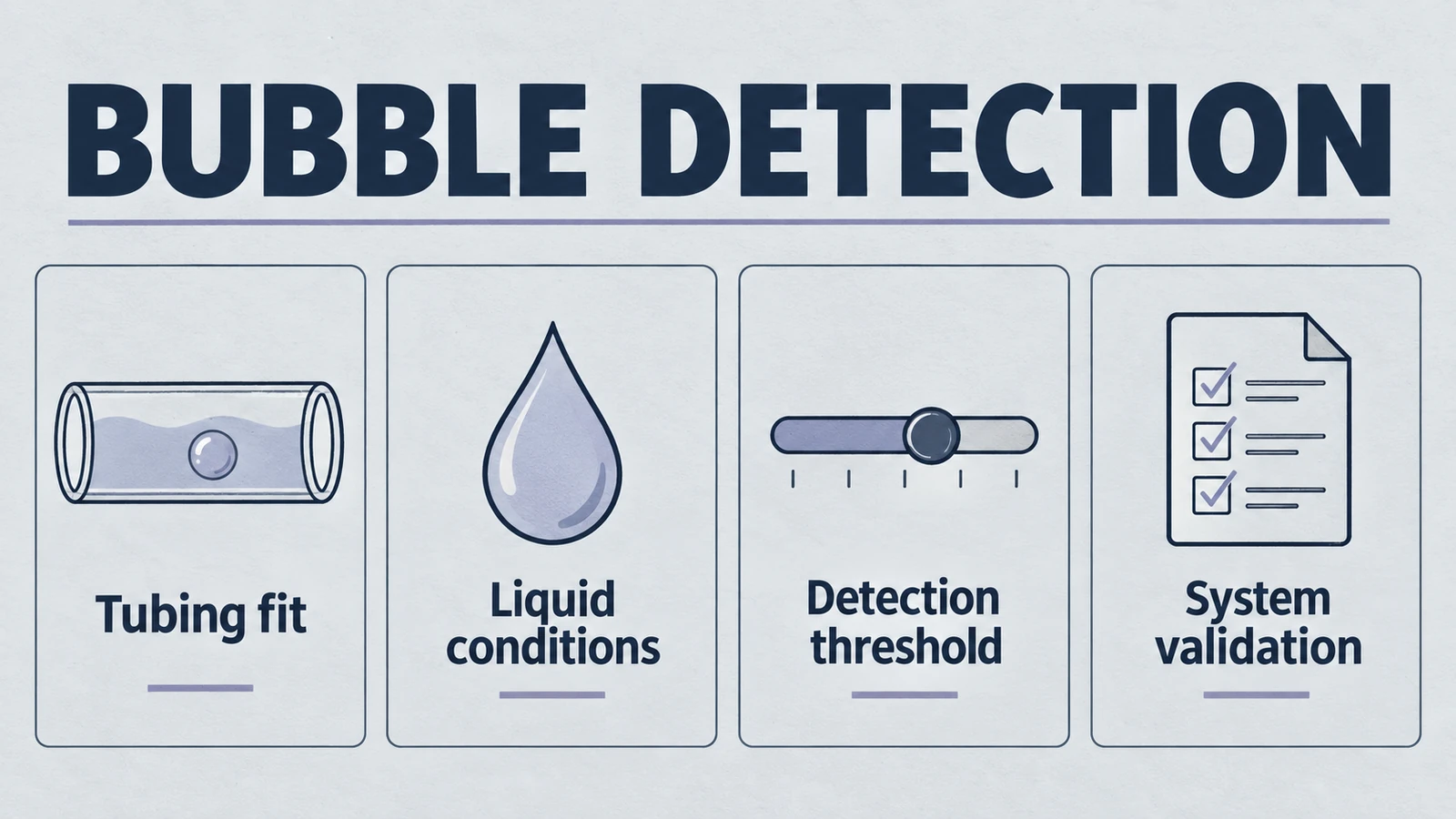
3. اعتبارات رئيسية عند اختيار مستشعر الفقاعات
اختيار مستشعر الفقاعات المناسب يتضمن تقييم عدة عوامل رئيسية مصممة لتطبيقك المحدد:
✅ حجم الأنبوب والمادة
تأكد من توافق المستشعر مع قطر الأنبوب، وسمك الجدار، ونوع المادة. الأنابيب السيليكونية الناعمة، والبلاستيك الصلب، و PVC كلها لها خصائص صوتية مختلفة. تدعم يوجي أحجام أنابيب ومواد متعددة ويمكنها تطوير تركيبات أو محولات مخصصة عند الطلب.
✅ نوع السائل
هل تتعامل مع الدم، المحلول الملحي، الحبر، الزيت، الكواشف، أو المحاليل الكيميائية؟ يجب أن تتماشى المطابقة الصوتية للمستشعر وحساسيته مع الكثافة، واللزوجة، والمعاوقة الصوتية للسائل المستهدف. مستشعرات يوجي محسنة لمجموعة واسعة من السوائل الطبية والصناعية.
✅ متطلبات الحساسية
تتطلب بعض التطبيقات—مثل أجهزة غسيل الكلى أو أجهزة التشخيص في المختبر—الكشف عن فقاعات دقيقة أصغر من 10 ميكرولتر. قد يحتاج البعض الآخر، مثل أنظمة الجرعات الصناعية، فقط إلى الكشف عن فجوات الهواء الكبيرة. حدد بوضوح عتبة الكشف وظروف التشغيل الخاصة بك.
✅ التركيب والتكامل
هل تحتاج إلى مستشعر خارجي يثبت بمشبك أو نموذج مدمج يتكامل في خرطوشة أو مشعب؟ تقدم يوجي خيارات تركيب مرنة وتعمل بشكل وثيق مع عملاء OEM لتطوير تصميمات متوافقة مع الهيكل أو موفرة للمساحة.
✅ الشهادات والموثوقية
إذا كان تطبيقك في مجال الرعاية الصحية أو التشخيص المختبري، فتأكد من امتثال المستشعر لمعايير السلامة والجودة ذات الصلة مثل نظام جودة للأجهزة النهائية أو لوائح الجهات التنظيمية. تتبع يوجي بروتوكولات صارمة لمراقبة الجودة وتورد المستشعرات لشركات الأجهزة الطبية المعتمدة في جميع أنحاء العالم.
4. لماذا العمل مع يوجي؟
عندما تختار يوجي كشريك لمستشعرات الفقاعات، فإنك تحصل على:
- خبرة منذ عام 1996 في تصنيع المكونات الكهرضغطية وبالموجات فوق الصوتية
- حلول OEM مخصصة تدعم مجموعة واسعة من أحجام الأنابيب وتصميمات الهيكل ومتطلبات الحساسية
- قدرة توريد عالمية، تخدم العملاء في جميع أنحاء أوروبا وأمريكا الشمالية وآسيا
- دورات نماذج أولية سريعة لتسريع تطوير المنتج وتقليل وقت طرحه في السوق
- دعم هندسي تعاوني، من المفهوم الأولي وحتى الإنتاج الضخم
- أسعار تنافسية واستقرار توريد طويل الأجل، مثالي للمشاريع الطبية والصناعية كبيرة الحجم
يوجي هي أكثر من مجرد مورد—نحن شريك هندسي وإنتاجي طويل الأجل لأنظمة إدارة السوائل الحيوية الخاصة بك.
5. دعنا نبني مستشعر الفقاعات المثالي لك
إذا كنت بحاجة إلى مستشعر فقاعات يتطابق تمامًا مع أنبوبك، و سائلك، و متطلبات دقتك، نود أن نسمع منك. سواء كنت في مرحلة المفهوم أو تستعد للإنتاج الضخم، فإن فريق يوجي مستعد لتقديم دعم فني خبير وحلول عملية.
👉 اتصل بنا على business@szyujie.com لمناقشة مشروعك، أو طلب عينة، أو بدء خطة تطوير مخصصة.
دعنا نبني أنظمة سوائل أكثر ذكاءً وأمانًا وموثوقية—معًا.
هل أنت مهتم برؤية مستشعرات الفقاعات لدينا أثناء العمل؟ تحقق من صفحة منتج مستشعر الكشف عن الفقاعات بالموجات فوق الصوتية.
تعزز تقنياتنا الكهرضغطية المتقدمة أنظمة الكشف عن الفقاعات بالموجات فوق الصوتية لدينا، مما يوفر حساسية وموثوقية رائدة في الصناعة. اعرف المزيد عن قدراتنا التصنيعية ولماذا يثق مصنعو المعدات الأصلية في جميع أنحاء العالم في يوجي للحصول على حلول كهرضغطية مخصصة.
للقراءة ذات الصلة، استكشف مقالنا حول العلم وراء محولات الطاقة بالموجات فوق الصوتية لفهم التكنولوجيا التي تشغل أنظمة الكشف عن الفقاعات لدينا.